


Some days, getting outside starts with a simple question: “What should we play?” These outdoor activities for kids give you ten answers, from a nature hunt with no special equipment to games built around a swing set or climbing area you already have.
Choose one idea that fits your space, your child's interests, and the materials on hand. You don't need to organize all ten—or turn an ordinary afternoon into a big project. For equipment-based activities, check the specific model's age, weight, installation, and use requirements first.
| Activity | What you'll need |
|---|---|
| Nature scavenger hunt | A short observation list |
| Chalk movement trail | Sidewalk chalk |
| Backyard relay | Simple route markers |
| Swing game | A suitable, properly installed swing set |
| Monkey bar challenge | Suitable, properly installed climbing equipment |
| DIY obstacle course | Markers, a soft ball, and a basket |
| Ninja course | Suitable, properly installed ninja equipment |
| Water play | Cups, a sponge, and a shallow container |
| Ball game | A soft ball |
| Nature art | Paper, crayons, and fallen leaves |
Benefits of Outdoor Play for Kids
Outdoor play gives children opportunities to move, explore, and spend time with other people. A yard can become a place to notice changing leaves, invent a game, or practice taking turns. Mixing active games with quieter activities also gives children different ways to join in.
The American Academy of Pediatrics describes connections between outdoor play and physical activity, curiosity, learning, and mood. These are reasons to make room for outdoor time, rather than promises about what any particular game or piece of equipment will achieve. See the AAP's guide to why playing outside matters.
10 Fun Backyard Activities for Kids
1. Go on a Nature Scavenger Hunt
What you'll need: A spoken or written list of things to notice.
How to play: Ask your child to find something round, something green, and something that makes a sound. Explore a clearly defined area together, then take turns describing your discoveries. Looking and pointing work just as well as collecting—there's no need to pick plants or handle insects.
Make it your own: Start with one clue at a time, or invite your child to make a list for you. For a quieter version, sit together and see what you can spot from one place.
2. Draw a Sidewalk Chalk Movement Trail
What you'll need: Sidewalk chalk and a suitable paved area away from traffic and moving play equipment.
How to play: Draw a starting point, a winding line, and a few circles. Decide what each mark means: follow the line, step into a circle, or pause and stretch. Walk through the route together before taking turns.
Make it your own: Let your child redraw one section or invent a new symbol. Keep the movements within their abilities; a walking route can be just as playful as a jumping one. The chalk marks are the activity, so you don't need extra obstacles.
3. Run a Backyard Relay
What you'll need: Two visible markers and a clear route.
How to play: Pick a start and a turnaround point. Each player travels to the far marker and returns before the next person begins. Try walking, marching, or jogging, depending on the space and the players.
Make it your own: Work together to complete one round instead of declaring a winner. Shorten the route when needed, and let each person choose a movement they can comfortably manage. A two-person parent-and-child relay works, too—no big group required.
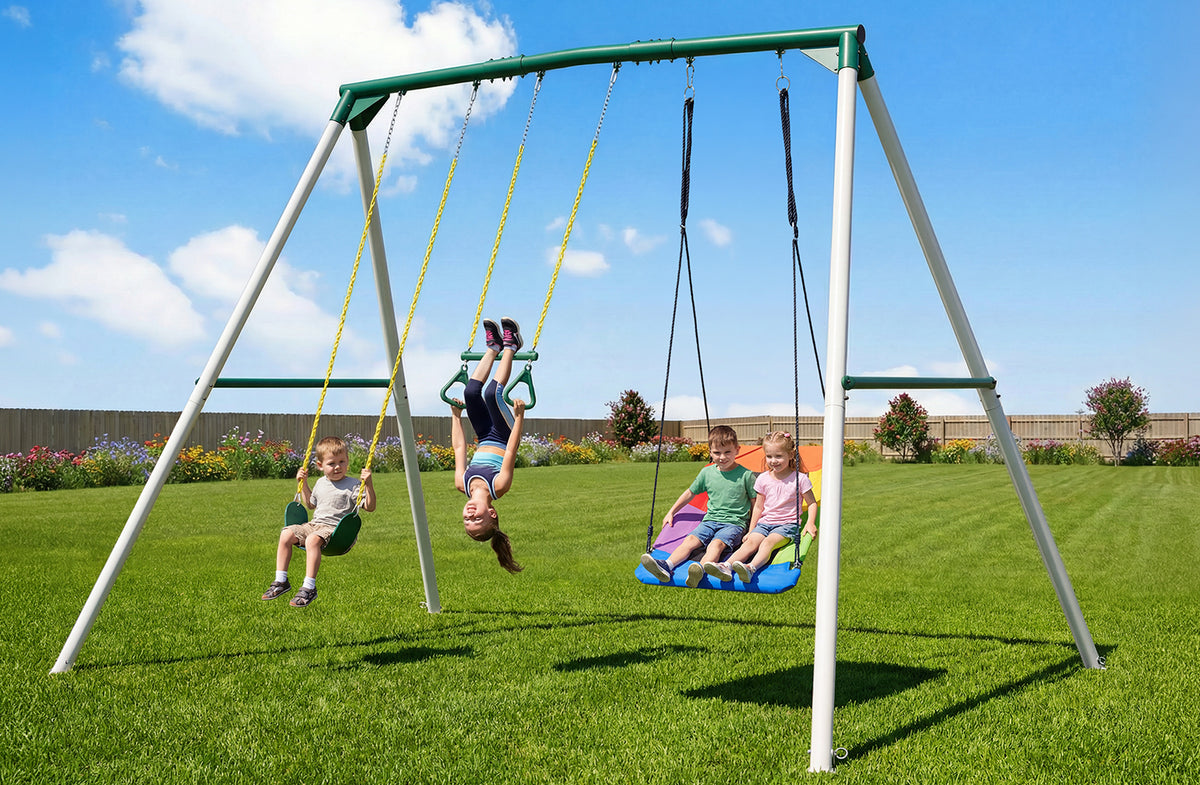
4. Add a Simple Game to Swing Time
What you'll need: A suitable swing set, installed and maintained according to its instructions.
How to play: Add conversation to ordinary seated swinging. Ask the rider to name something they can see, choose an animal for you to guess, or take turns adding words to a silly story. Keep the game verbal so it doesn't encourage reaching for objects or changing position.
Make it your own: Change the questions, not the height or intensity. Wait until the swing stops before switching riders, and keep other players outside its path.
If you're considering equipment, explore Hapfan's backyard swing sets and review the requirements for the model you choose.

5. Try a Monkey Bar Challenge
What you'll need: Suitable monkey bars with the required installation, clearances, and protective surfacing.
How to play: Start by asking what your child would like to try within the equipment's intended use. Keep the goal manageable rather than insisting on crossing the entire set. Supervise, allow breaks, and let children take turns without rushing the person using the bars.
Make it your own: Celebrate an attempt or a familiar movement instead of comparing distances or times. If the equipment isn't appropriate for your child, choose a ground-level activity from this list.
Browse Hapfan's backyard monkey bars for equipment options, checking each model's requirements before choosing.

6. Build a DIY Backyard Obstacle Course
What you'll need: Route markers, a soft ball, and a basket.
How to play: Combine three ground-level tasks: walk around the markers, stop at a designated spot, and toss the ball toward the basket. Walk through the sequence first, then take turns completing it. Keep the route separate from swings and climbing equipment.
Make it your own: Move the basket closer, remove a task, or let your child rearrange the order. This backyard obstacle course for kids doesn't require raised platforms or homemade climbing structures. Don't attach ropes or improvised accessories to play equipment.
7. Explore a Backyard Ninja Course
What you'll need: A purpose-built ninja course appropriate for your child and installation site.
How to play: Once an adult has installed and checked the equipment according to its instructions, choose an intended activity your child is ready to attempt. Take turns and focus on the experience rather than racing or finishing every obstacle.
Make it your own: Choose fewer tasks instead of adding homemade attachments or changing installation heights beyond the manufacturer's directions. Unlike the DIY ground course above, this option depends on suitable equipment and its specific requirements.
Explore Hapfan's backyard ninja obstacle courses if you're planning an equipment-based setup.

8. Set Up Simple Water Play
What you'll need: A shallow container, cups, and a sponge.
How to play: With an attentive adult present, try pouring between cups, squeezing the sponge, or washing a washable toy. Keep the activity separate from climbing equipment and routes used for running.
Make it your own: Offer just two cups or one sponge to start. Stay close and give children your full attention; shallow water still presents a drowning hazard. Empty the container immediately afterward and prevent unsupervised access. The AAP's water-safety guidance explains supervision and household water hazards in more detail.
9. Play a Ball Game Together
What you'll need: A soft ball and a clear area.
How to play: Start by rolling the ball back and forth. Once everyone understands the turn-taking, choose a target and try rolling toward it. Retrieve the ball before the next player begins.
Make it your own: Bring the target closer, make it wider, or keep the game seated. If players are ready for a different challenge, try a gentle toss into a basket. Change one thing at a time so the game stays easy to follow.
10. Make Garden-Inspired Nature Art
What you'll need: Paper, crayons, and a few fallen leaves—or simply a view of the yard.
How to play: Look closely at a leaf's shape and edges. Draw what you notice, or place a fallen leaf under the paper and gently rub a crayon over it. Finish by letting each person explain their picture.
Make it your own: Look for patterns, draw the same plant in different colors, or make a picture without collecting anything. This quieter option gives the afternoon a change of pace after active backyard games.
Make a Small Backyard Work
Choose activities that fit the space you actually have. Nature observation, drawing, and a short rolling game can use a smaller area than a relay. Rotate activities rather than setting everything out at once.
For play equipment, the product's footprint isn't the full space requirement. Allow for the manufacturer's specified use zones, moving parts, and protective surfacing. Keep quiet activities away from moving swings, and don't squeeze equipment into a space that cannot accommodate its requirements.
Backyard Play Safety: What to Check First
Before starting, check the activity area and match the task to your child's abilities. For equipment, follow the exact model's instructions for age and weight limits, assembly, anchoring, use, and maintenance.
The CPSC's Home Playground Safety Checklist emphasizes appropriate protective surfacing, regular equipment checks, removing hazards, and adult supervision. Grass or dirt alone does not provide adequate protection from falls off playground equipment. Do not attach jump ropes, pet leashes, or other improvised ropes to equipment.
Check for worn parts and loose hardware before play, keep the area clear, and address problems before children use the equipment.
Frequently Asked Questions
What are easy outdoor activities for kids at home?
Try a nature hunt, chalk trail, rolling-ball game, or nature drawing. Start with materials you already have and offer two choices so your child can help decide.
How much physical activity do kids need?
The CDC recommends activity throughout the day for ages 3–5 and at least 60 minutes of moderate-to-vigorous activity daily for ages 6–17. It doesn't all have to happen outdoors, and quieter activities such as drawing aren't equivalent to active running games.
How can I make backyard play safer?
Supervise, choose suitable activities, inspect the area, and follow equipment instructions. Give water play close attention, and check both equipment and protective surfacing regularly.
Start with One Backyard Activity
Pick an idea, gather what you need, and let your child help shape the game. A favorite activity is worth repeating—with a new clue, a different drawing, or another turn together. You can build a varied outdoor routine one ordinary afternoon at a time.
